



Engineering Decisions That Reduce Logistics Damage in Global Case Shipments

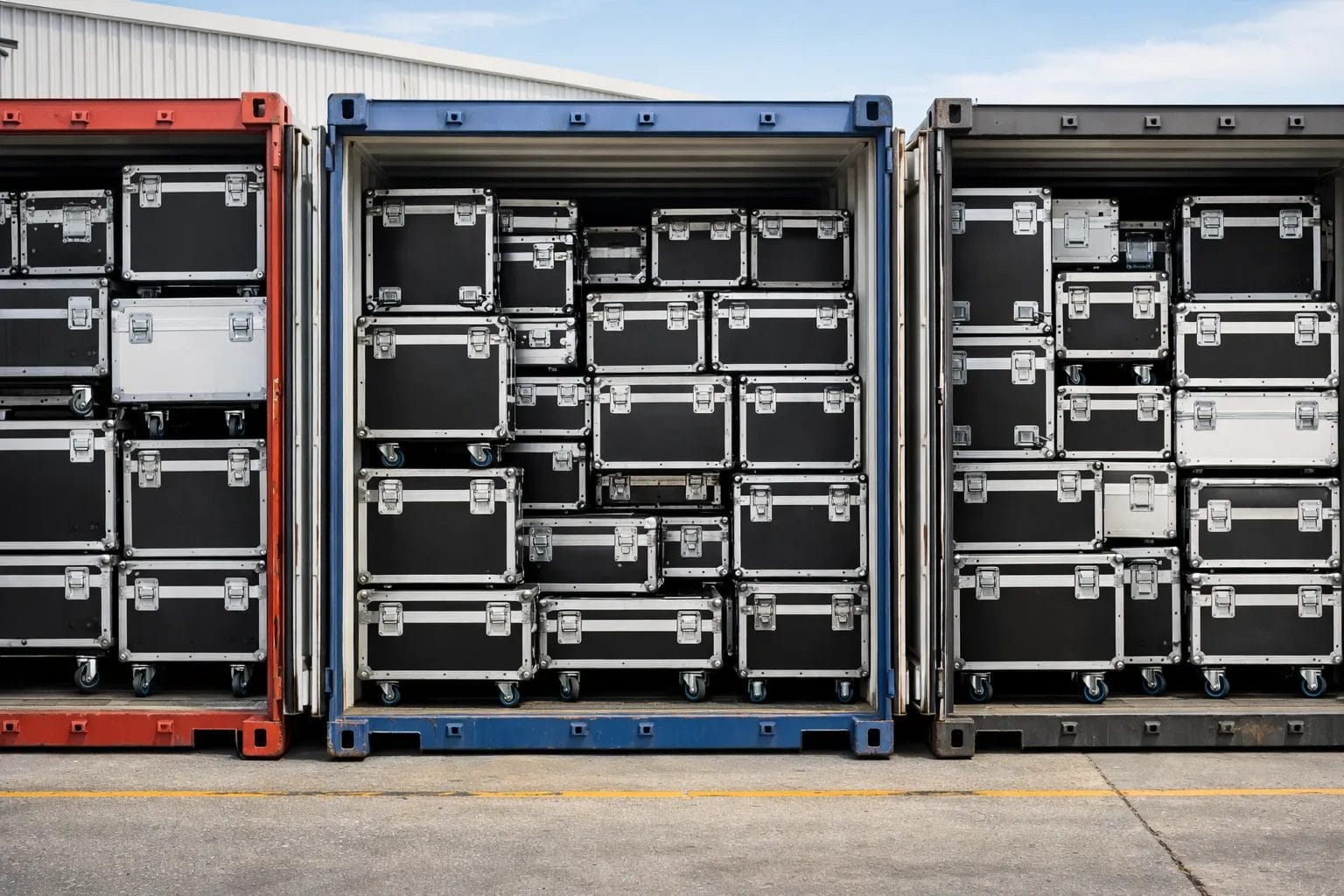
Engineering design features that reduce shipping damage in container-level road case orders. Learn design choices that prevent transit damage costs.
Your insurance company just denied a $47,000 equipment claim. The touring lighting controllers arrived broken after shipping from China. The adjusters said the cases looked fine externally, so the damage must be from "inadequate packaging."
Sound familiar?
This exact scenario plays out weekly for AV production companies and equipment distributors ordering bulk road cases internationally. Here's what most buyers don't realize: the engineering decisions that prevent this happen months before containers leave port.
Why Your Sample Cases Lie to You
Here's the uncomfortable truth about container shipping. Those perfect sample cases you approved? They'll never experience what happens inside a forty-foot container crossing the Pacific.
Real container shipping involves stresses that prototype approval completely misses. Cases get stacked seven units high. They sit under maximum compression for three weeks straight. Reach stackers slam containers together during port operations, creating lateral impacts your drop tests never anticipated.
Between 2017 and 2019, the Port of Los Angeles alone recorded 500 incidents involving container handling equipment damage. Poor handling and packaging errors accounted for 65% of all cargo damage claims during this period.
That's not theoretical risk. That's documented reality for anyone ordering container-level volumes from Chinese manufacturers.
The Engineering Features Nobody Talks About
Most procurement specs focus heavily on materials. Aluminum thickness. Plywood grade. Hardware brands. These absolutely matter for manufacturing consistency.
But they don't address logistics protection.
The engineering features that actually reduce shipping damage operate at the product design level. They determine how cases respond when real-world transit gets rough. And it always gets rough.
Corner Reinforcement: Beyond the Drop Test
ATA specifications require road cases to survive 160 face drops from 30 inches. Sounds rigorous, right?
Container shipping laughs at drop tests. Your cases experience sustained compression from stacking weight, lateral impacts from misaligned reach stackers, and vibration loads during ocean transport that compound over weeks at sea.
Corner reinforcement design separates cases that survive from cases that fail. We're not talking about passing certification tests. We're talking about engineering that accounts for forces certification testing doesn't replicate.
Stackability Engineering: The Hidden Killer
Here's where most buyers get surprised. Stackability isn't just about load ratings on spec sheets.
It's about maintaining panel integrity when stacked seven high under full container weight for three solid weeks. It's about foam that doesn't permanently compress under sustained load. It's about cases at the bottom of the stack arriving in the same condition as cases on top.
High-quality foam must deflect no more than 60% of thickness when dropped from one meter. But sustained compression over weeks? That's completely different physics. Cases engineered for global shipment use foam formulations that resist compression fatigue, not just impact.

Panel Design: The Flex Problem
Panel flex seems minor during quality inspection. A little give in the sidewalls? Barely noticeable.
Three weeks of constant low-level vibration during ocean transit? That "minor" flex gradually loosens rivets, compromises edge bonding, and creates structural weaknesses that show up as equipment damage six months later.
Production companies shipping hundreds of cases discover this the expensive way. The cases that looked identical during factory inspection perform completely differently after multiple container shipments.
What Container Environments Actually Do to Your Cases
Let's talk about "container rain." Ever heard of it?
When containers transition between temperature zones during ocean shipping, condensation forms inside. The industry calls it container rain because that's literally what it is—moisture dripping inside your sealed container.
Standard gasket installation doesn't prevent this. Engineering decisions around seal design, vent placement, and panel joint construction determine whether your expensive broadcast equipment arrives covered in condensation or stays dry.
Rust and corrosion accelerate dramatically in coastal areas where salty sea air contacts metal components. Some materials that perform excellently in controlled warehouse environments degrade fast under sustained salt air exposure during ocean transport.
Material selection for international shipping differs fundamentally from domestic transport requirements. This isn't obvious during prototype evaluation when cases never leave climate-controlled facilities.
The Hardware Decisions That Matter More Than You Think
Steel knuckle ball corners must attach with six machine-driven steel rivets. Piano hinges require riveting every three inches across the entire case width.
These aren't arbitrary specifications. They address specific failure modes containers experience during port handling operations.
Here's what actually happens at ports: Side impacts during stacking operations create significantly greater forces than rear impacts during loading. Lateral misalignments rank among the most damaging handling events your cases will experience.
Hardware recessing represents one of the most overlooked engineering decisions. Cases designed primarily for truck transport often feature external hardware that works fine domestically but creates vulnerability points in container environments.
ATA specs recommend recessed, spring-loaded handles with rubber grips. This isn't aesthetic preference. It's functional design addressing the reality that cases contact adjacent containers repeatedly during ocean transport.
Weight Distribution: More Than Handling Convenience
Uneven weight distribution damages more than just container floors. It causes cases to topple during the ground transport phase after ocean shipping. For touring production companies moving entire equipment packages, this creates cascading damage across multi-modal transport.
Cases engineered with balanced weight distribution reduce accumulated stress on both the cases themselves and equipment inside. This matters across ocean shipping, port handling, and final ground delivery to venue or warehouse.
Why Standard Construction Fails Internationally
Road cases built to general quality standards often work fine for domestic ground transport. They fail when subjected to container shipping from China to Western markets.
The failure modes aren't dramatic. They're gradual. Making them nearly impossible to trace back to engineering decisions made during initial specification development.
Improper stowage, lashing failures from broken fittings, and structural weaknesses from corrosion create cascading damage in container environments. Cases not specifically engineered for container stacking experience panel flex that gradually loosens rivets and compromises edge bonding.
This degradation doesn't show during initial unloading. It manifests as premature case failure after several shipping cycles. By then, you're deep into fleet operation with hundreds of cases already deployed.
Heavy seas test container limits constantly. Movement and cargo shifting lead to abrasions, structural stress, and occasionally complete collapse of container stacks. Between 2017 and 2021, over 530,000 insurance claims were filed for ocean freight, totaling $95 billion in cargo losses.
The Questions Procurement Should Actually Ask
Smart buyers sourcing container-level orders from Chinese manufacturers evaluate engineering specifications differently than small-quantity buyers.
The questions shift from general quality assessment to specific design features addressing documented logistics risks.
Can the stackability engineering maintain panel integrity under maximum load for three weeks straight? Not short-term warehouse stacking—sustained ocean voyage compression.
What foam formulations maintain compression resistance under sustained load? Not just initial impact absorption—dimensional recovery after repeated compression cycles during multiple shipping runs.
How does hardware attachment methodology prevent loosening during weeks of ocean transit vibration? Not just passing pull tests—maintaining structural integrity across multiple international shipping cycles.
These questions separate cases engineered for global logistics from cases built to pass general certification.
The Total Cost Math Nobody Does Upfront
Insurance claims represent just the visible portion of transit damage costs.
Equipment replacement expenses stack up. Project delays from damaged gear create downstream costs. Customer satisfaction tanks when rental equipment doesn't perform properly. Operational overhead managing damage claims adds up fast.
Missing containers and damaged cargo accounted for nearly 11% of all cargo damage claims in recent industry reports. While some incidents go unreported due to inadequate reporting mechanisms, the financial magnitude of transit protection failures is massive.
The cost comparison between cases engineered specifically for container shipping versus standard construction reveals itself over fleet operational lifespan. Not initial purchase price. Operational lifespan.
Production companies operating touring schedules discover this pattern: cases engineered for global logistics reduce equipment damage rates, extend useful case life through better repairability, and decrease insurance premiums through demonstrated damage prevention.
These benefits compound over hundreds of cases deployed across multiple years.
Engineering Design: Risk Management You Pay For Once
The engineering decisions embedded in road case design happen months before production. They represent the most cost-effective risk management available to companies sourcing container-level orders.
By the time cases arrive damaged or equipment protection proves inadequate, correction costs exponentially more than specifying appropriate engineering design upfront.
Think about it this way: Would you rather spend 15% more on properly engineered cases now, or deal with equipment damage claims, insurance disputes, and premature case replacement later?
For production companies managing touring equipment worth hundreds of thousands, distributors building rental fleet inventories, and operations teams responsible for equipment protection across global logistics networks, engineering design decisions determine ROI.
How Armor Cases Approaches Global Shipping Reality
We learned this lesson years ago working with Western production companies and distributors placing container orders. The pattern was consistent: procurement teams focused appropriately on manufacturing quality but missed engineering details that determined logistics survival.
Our engineering process starts with understanding how cases actually fail during container shipping. Not just passing certification tests. Real failure modes from real transit conditions.
We engineer stackability for actual container environments—cases stacked seven high under maximum load for extended periods, not brief warehouse stacking. Our corner reinforcement addresses lateral collision forces from port equipment, not just vertical drop impact.
Panel construction incorporates flex resistance preventing the gradual hardware loosening that standard construction experiences after several shipping cycles. Material selection reflects the reality of weeks in salt air during ocean transport.
Hardware finishes, edge treatments, and coating systems address corrosion resistance as engineering requirements, not aesthetic choices. For Western buyers managing equipment worth millions, these design decisions directly affect whether cases protect gear through multiple international shipping cycles.
Our foam engineering prioritizes performance under container shipping conditions: sustained compression resistance, moisture resistance during humidity exposure, dimensional recovery after compression cycles. Not just optimizing for initial impact absorption.
Final Perspective: Engineering Design as Insurance
The engineering decisions embedded in road case design represent insurance you purchase once. By the time transit damage becomes apparent, switching suppliers or redesigning cases costs dramatically more.
Smart procurement teams evaluate engineering specifications addressing documented shipping risks. The questions focus on design features proven to reduce transit damage in container environments, not just general quality markers.
For production companies, distributors, and operations teams responsible for equipment protection across global logistics, engineering design determines whether bulk case investments deliver value or generate hidden costs through premature failure.
Ready to discuss engineering specifications for container-level orders? Explore our comprehensive approach to evaluating flight case manufacturers and discover how engineering-led design prevents logistics damage that standard construction allows.